How to Make Café-Style Masala Chai — Proportions, Spices and Scaling for Business
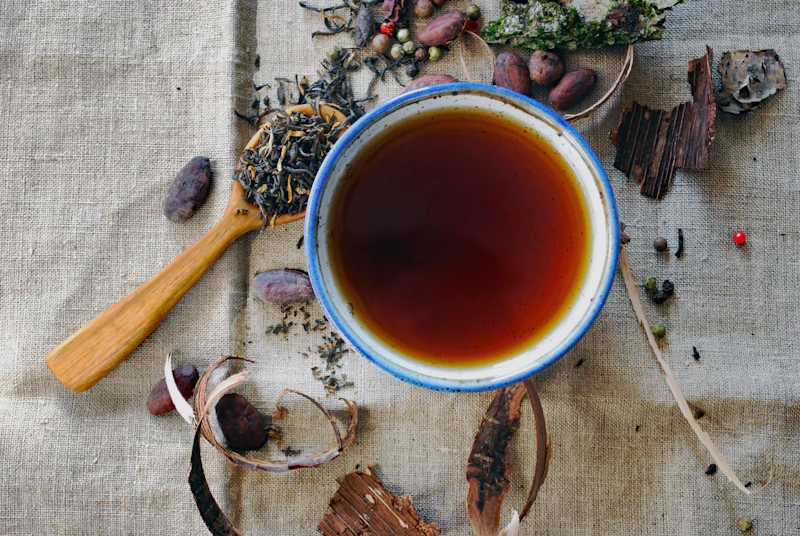
Masala chai done badly is tea with spice powder dumped in. Masala chai done well is layered, warming, and distinctive — something customers return for. For a café or restaurant, the difference is in the ratio, the spice quality, and the preparation method.
This guide covers the café-grade approach: not the quick home version, but the preparation that holds consistency across 50–200 cups per service.
The Core Spice Blend
Authentic masala chai uses five primary spices. Each plays a specific role:
| Spice | Role | Notes |
|---|---|---|
| Ginger (dry/fresh) | Heat, sharpness | Dry ginger powder is more consistent; fresh adds brightness |
| Green cardamom | Floral lift, aroma | Lightly crushed — not powdered. Overpowering if too much |
| Clove | Depth, warmth | Use sparingly — 1 clove per cup maximum |
| Cinnamon | Sweetness, body | Ceylon cinnamon preferred over cassia for milder taste |
| Black pepper | Subtle heat | Optional but traditional in some South Indian versions |
The ratio that works for most café menus:
- Ginger powder: 40%
- Cardamom: 30%
- Cinnamon: 15%
- Clove: 10%
- Black pepper: 5%
If you use a premix supplier, check whether this breakdown matches their formulation — cardamom-heavy premixes can taste perfumed rather than spiced.
The Base: Which Tea to Use
The best café masala chai starts with Assam CTC dust — not leaf, not fannings. Dust releases colour and tannins fast, which is what you need to cut through full-fat milk.
Do not use:
- Nilgiri leaf (too delicate, loses character in boiled milk)
- Green or herbal tea bases (wrong flavour profile for masala chai)
- Pre-flavoured tea bags (inconsistent, often artificial)
Single-Cup Café Recipe
For a 200 ml cup of chai:
- Water: 80 ml
- Full-fat milk: 120 ml
- Assam CTC dust: 3–4 g (approx. ¾ teaspoon)
- Spice blend: 1.5 g (approx. ½ teaspoon)
- Sugar / jaggery: to customer preference (add at service, not brewing)
Method:
- Bring water to boil in a saucepan
- Add CTC dust and dry spice blend
- Simmer 90 seconds — this is the key step most cafés rush
- Add cold milk, bring back to boil
- Reduce heat, simmer 60 seconds
- Strain through a fine mesh into the serving vessel
The simmering step extracts spice oils properly. If you skip it and just add spices to boiling milk, the result is one-dimensional.
Scaling for Bulk Café Service (50 Cups)
For a 10-litre batch (approx. 50 × 200 ml cups):
| Ingredient | Quantity |
|---|---|
| Water | 4 litres |
| Full-fat milk | 6 litres |
| Assam CTC dust | 150–175 g |
| Spice blend | 60–75 g |
Method for bulk:
- Heat water in a large vessel (minimum 15-litre capacity)
- Add CTC dust and spice blend when water reaches 80°C
- Bring to full boil, reduce to medium-low simmer for 3 minutes
- Add cold milk, return to boil
- Reduce heat — do not let it boil hard after milk is added (prevents curdling)
- Simmer 2 minutes, strain into a preheated service vessel
- Serve within 45 minutes — do not hold chai longer or flavour deteriorates
Holding Chai for Service: What Works and What Doesn’t
Do: Use a double-jacketed vessel or bain-marie at 70–75°C. This holds temperature without continuing to cook.
Don’t: Keep chai on direct heat. The milk scorches, the spices turn acrid, and the tea becomes undrinkably bitter within 20 minutes.
Practical rule: Brew a fresh batch every 30–40 minutes during peak service. It takes 8 minutes per batch with practice — worth it for quality.
Common Mistakes
Too much cardamom: Chai tastes perfumed, not spiced. Cardamom should complement ginger, not dominate.
Brewing without pre-boiling spices in water: Skipping the water-only simmer step means spice oils don’t extract. The chai tastes flat.
Using cold milk in the first step: Always add milk after the water-and-tea stage. Adding cold milk at the start creates a thinner, weaker decoction.
No straining: Even fine CTC dust leaves particles. A clean mesh strainer prevents gritty cups.
Using a Premix vs. Making Your Own Blend
For cafés with consistent high volume, a masala premix from a verified supplier (tea + spices, no sugar) eliminates recipe variation across staff shifts. The spice ratio is fixed, reducing prep time and quality variance.
TrueBlend Marketing supplies masala chai premix in 5 kg and 10 kg packs — tea and spice blend combined, no sugar added. WhatsApp +91-8807237891 for pricing and a free sample.
TrueBlend Marketing Team
Bangalore's B2B coffee and tea wholesale distributor. Supplying cafés, canteens and restaurants across Bangalore with filter coffee, instant coffee and tea in 5–100kg lots.